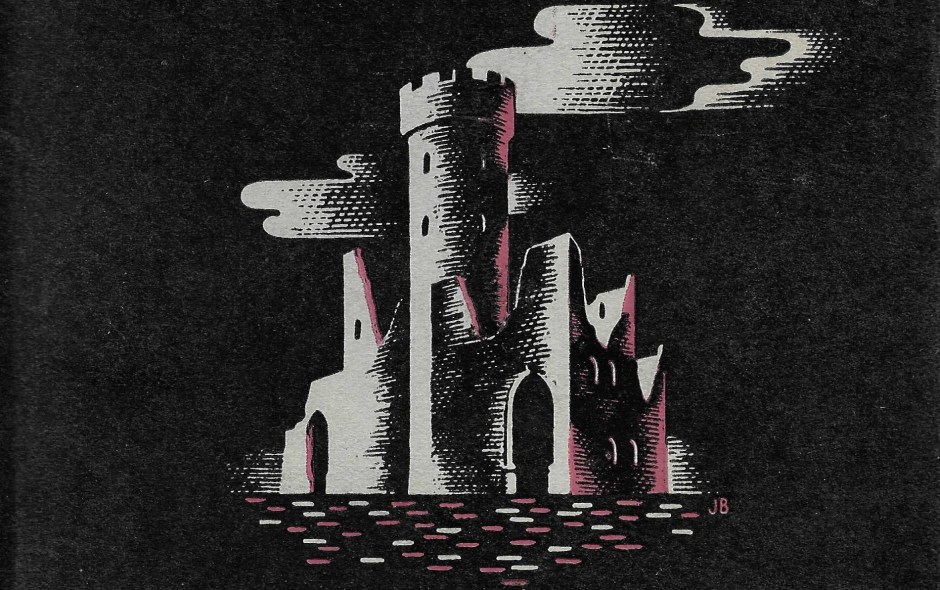
In the late 1730s Mark Amberley, of the Cottington Place estate in Southshire, England, built a sham castle on his estate. He also built a shell-encrusted grotto, which became home to the obligatory bearded hermit dressed in brown hessian robes. The creation of these follies is detailed in the family archive of letters and diaries, which was explored by a descendant in the twentieth century.
Tag: Hagley Hall
Scribblings on the Wall.

Although vandals in earlier centuries may not have been armed with marker pens and aerosol sprays, they were still keen to leave their mark. Follies and garden buildings, often in remote locations, seem to have been particularly attractive targets. Many seemed to think this activity was perfectly acceptable and used their pencil or pocket knife to leave their full name, clearly identifying themselves as the culprits. Owners tried various tactics to deter the scribblers.
The Temple of Theseus, Exmouth, Devon

In the early decades of the nineteenth century Lord Rolle of Bicton House in Devon, developed land by the sea in Exmouth in a bid to attract tourists. He made ‘commodious gravel walks’ and created gardens with rustic benches, as well as building elegant marine residences. Lord Rolle also granted a lease on a plot of land to one William Kendall, who in 1824 built a ‘very pretty’ house modelled on the Temple of Theseus in Athens.
Earl of Plymouth Monument, Bromsgrove Lickey, Worcestershire

In 1833 Other Archer Windsor, 6th Earl of Plymouth, died. Almost immediately there were calls to erect a monument in his honour, and a public subscription was raised. With funds in place, the foundation stone was laid in May 1834. The chosen site was on Bromsgrove Lickey, a prominent eminence which would ensure that the obelisk would be an ornament to the landscape and visible from miles around.
Hagley Park, Worcestershire

It is getting a bit ‘backendish’ – as they say in Yorkshire – and the Folly Flâneuse is taking a short break. Meanwhile here are some of the wonderful landscape ornaments built by the Lyttelton family at Hagley Park, seen on a perfect autumn day as the leaves begin to turn bronze and gold, and the mist clears to reveal a blue sky.